
Search results: 2677
Ce cours de grammaire française vous introduit aux parties du discours et à la morphosyntaxe du verbe et de la phrase.
At the end of the module students should be able to understand the relationship between Tourism and History, the world heritage convention, the tourism impact and problems and Tourism and historical sites in Rwanda
BRIEF DESCRIPTION OF AIMS AND CONTENT
The aim of this module is to provide an in-depth overview of both the historical and contemporary interstate relations in Africa and to situate Africa within world affairs. This module is designed to provide an analysis of the major themes and workings of international relations in Africa. It seeks to assess the relations between African states and their external environment. Foreign policy makers attempt to reconcile domestic interests with external circumstances, taking account of the available means, resources, and institutions for doing so. This module will provide a greater understanding of the environment within which African states conduct their international relations, with particular attention being paid to providing a good understanding of the actors, contexts and outcomes. Political independence by the various African states launched into international politics a group of the world’s poorest, weakest, and most artificial states. How have such states managed to survive and to effectively conduct foreign policy? To what extent is their survival now threatened? This module will attempt to comprehensively treat the interplay between domestic and international politics while also analyzing the efforts by African states to manage their external relations amid “seismic shifts” in the internal, regional, and global environments. Throughout this mode, we shall also identify patterns of change, examine constraints, and give careful attention to some of the processes that influence policy outcomes.
This module’s objectives are:
D.1. To enable the student to understand the concept and theories of International Relations (IR);
D.2. To enable the student to understand the role of IR in Africa’s politics and issues related to it;
D.3. To develop in the students the ability to apply IR skills in the field particularly Africa’s field;
COURSE CONTENT
Definition of key terms, operation management, operation decision, closed versus open systems views of operations. Product design and process selection-manufacturing. Product design and process selection- service. Material requirement planning, total quality management, facility location, facility layout, planning capacity. Material management, definition of material management related terms. Purchasing inventory control and management, definition of cost of inventory, independent versus dependent demand. Inventory control systems for independent demand. Inventory system for independent demand.
OBJECTIVE
At the end of the course the student should understand modern way of production and operating firms.
The module of Agribusiness and Institution is taught to students of third year Agribusiness. This module is composed of three components viz. Agricultural Product Marketing, Institutional Economics and Rwandan Agribusiness Programs and Policies.
Brief description of aims and content
Aim: The main objective of this course is to become familiar with basic knowledge of marketing, Agricultural Policies; Develop policies
Content: Marketing Concept, Marketing Systems, Approaches of Marketing Systems, Price Analysis, Dynamic Specification of Agricultural Supply Response, Marketing Margin for Farm Products, Marketing Space and Transfer Cost; Inter-regional Trade, Marketing Policies.
Learning Outcomes
Having successfully completed the module, students should be able to:
- Understand the Theory of Demand and Supply, analyse the price (pricing), develop and Analyse Agricultural Policies
- Analyse problems with help of appropriate tools and define and evaluate relations between all aspects
- Independently carry out a field survey and apply basic tools of agribusiness and Institutions
References
The following textbooks are recommended for reading:
Closkey D. N. 1985. The Applied Theory of Price. Second Edition
Ferris J, N. 2005. Agricultural and Commodity Analysis. Fifth Edition. Michigan State University Press, USA
Pashigian P. B. 1995. Price Theory and Applications. Mc-Graw Hill. New York. USA
Sterner T. . Policy Instruments for Environmental and Natural Resource Management
Varian H. R. 2005. Intermediate Microeconomics. A Modern Approach. Seventh Edition. University of California, USA
CateoreP.R. 2005. International Marketing. Mc-Graw Hill
Dhrav G. and Levy M. 2008. Marketing. Mc-Graw Hill. New York. USA
Ferris J, N. 2005. Agricultural and Commodity Analysis. Fifth Edition. Michigan State University Press, USA
Varian H. R. 2005. Intermediate Microeconomics. A Modern Approach. Seventh Edition. University of California, USA
Useful journals can be found on Agora database accessible through www.ur.ac.rw. Agora database is a free database providing full text downloadable papers.
Recommended journals are the following: Journal of Applied statistics, Agricultural Economics
Rwandan Agribusiness Programs and Policies is one of the components of this module. It offers students the possibilities to analyse and understand existing agribusiness development policies and programs.
This module aims to provide an understanding on Consumer theory, producer theory, macroeconomic aggregates, activities in production unity, systems of production and factors of production in agricultural sector, agricultural production, commercialization of agricultural produce, agricultural revenues, role of agricultural sector in economic development, analysis of main indicators of structure and evolution of Rwandan economy, farm management in Rwanda, rural cooperative and association operation.
This module is intended to provide knowledge and skills in design of Steel and Timber Structures. The module is offered to students enrolled in Civil Engineering, Structural and construction Engineering options. The course present principles of design of such steel and timbers structures or structural elements like connections, beams, different types of columns, columns bases, roof truss structure, etc. The design applications are based on allowable stress method, but also the plastic method will be introduced.
Briefly at the end of the module students will
1. Knowledge and Understanding in Steel and Timber terminology, concepts, properties, and the principles of Design and code practice of Steel and Timber Structures, starting from Structural Steel Connections using bolt, rivet and weld.
2. Cognitive, Intellectual skills, and Application skills in design of steel and timber connections. design Steel tensions, compression members, beams, built-up columns and roof trusses, under different types of loadings, Steel Roof Truss structure, etc
3. Communication/ICT/Numeracy/Analytic Techniques/Practical Skills in planning, conducting and preparing technical and managerial report on individual research program, as well as being creative in the solution of problems in design and development.
4. General transferable skills while, learning independently in familiar and unfamiliar situations with open mindedness and in a sprit of critical enquiry, working constructively as a member of a team and to manage both time and other sources effectively to meet the deadlines, demonstrating general numerical skills and problem solving skills.
This part of the module is a continuation of EAP 2112 part one, delivered in Semester/ trimester 1. It will focus on advanced academic reading and writing, and will tackle other aspects such as critical reading and thinking, writing techniques like avoiding plagiarism by summarizing, paraphrasing, synthesizing, citing sources and referencing, rhetorical functions in academic writing. There will be also a focus on practice in oral presentation (speaking) skills and a room for discussion at a weekly basis. This content is more practical, which requires every student to be fully engaged both in reading provided materials and resources and doing activities as well as documenting yourself on the issues for which you need more information.
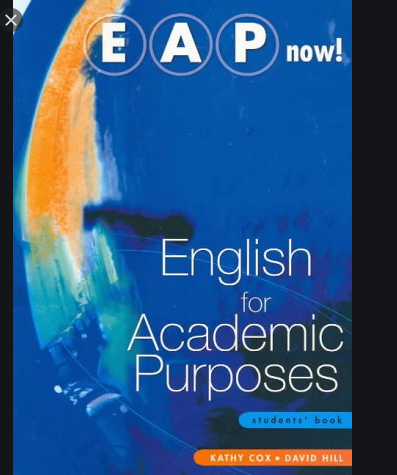
This module aims at developing an upper intermediate proficiency level in English to help you as a student communicate efficiently in different social and academic settings.
This course considers "structure" by considering successively the word, the phrase, the clause, the sentence, and the text. thus, words are classified, phrases are categorized and analyzed, "kernel" and "non-kernel" sentences are categorized and analyzed, and finally sentences are put together to form texts.
Background Colour
Font Face
Font Kerning
Font Size
Image Visibility
Letter Spacing
Line Height
Link Highlight
Text Alignment
Text Colour