
Search results: 2678
This Module will introduce students to the main reseach methods required to undertake the reseach project.
This module with associated practices are planned to provide student with a broad and comprehensive tuition, in Animal product technology and legislation, with the ability to proceed the milk and meat products, to describe the food safety context worldwide and the crucial role played by animal products, followed by the general hygiene in food industries and the HACCP system.
This course provides a fundamental understanding of fluid mechanics. Starting from the definition of a fluid, theory will be build up in order to describe, characterize, analyze and understand the behavior of fluids (gases, liquids) in motion or static. Mechanics of fluids is a fundamental subject and one that finds many applications in meteorology and in aeronautics. In engineering several industrial and technological applications are found from ship design to pipe modeling.
The following topics will be covered:
Introduction: Basic concepts of fluid mechanics Fundamental term; Physical value; Fluids and their properties; Forces inside fluid.
Fluid Statistics: Pascal’s law; Euler’s equation of fluid statics; Measurement of pressure; Relative statics of fluid-constant acceleration, rotation; Forces of hydrostatic pressure; Buoyancy; Flotation; Stability. Surface tension' Capillary Action and Cavitation.
Fluid Kinematics: Euler and Lagrangian specification of fluid flow; Streamlines; Pathlines; Stream surface; Stream tube; Mass/volume flow; Control volume.
Fluid Dynamics: Hydrodynamic limit - deriving fluid equations; Mass, momentum and energy conservation; Navier-Stokes’s equations; Euler’s and Bernoulli’s equations for Ideal fluid flow and applications; Streamfunctions for incompressible flows and exact solutions; Potential flow, irrotational flow and velocity potential formulation; Vorticity dynamics; Real fluid flow: Viscosity. Determination of losses; Reynolds experiment; Laminar and turbulent flow; Boundary layer and viscosity; Velocity profile; Losses in pipes; Frictional losses; Moody’s diagram; Local losses; Coefficients of resistance; Introduction to multi-scale turbulence. Transport in turbulent flows.
This module covers basic introduction to programming preferably python programming, then briefly review numerical solutions of the mathematical equations such as ODEs and PDEs in computational physics. It later goes to covering the computational problems in physics and their solutions. Finally one covers demonstration of computational physics packge such as fortran, maple, Matlab and sage math. The module has 10 credits.
This course of statistical physics is designed for undergraduate students in Physics department, School of Science at UR-CST. It starts with key reviews on the thermodynamcs and thermodynamic functions,
where through the use of Maxwell’s relations the Chemical potential is introduced. Then it moves to the basics of statistical approaches where the introduction of phase space, distribution functions
and microcanonical ensemble is introduced. Through the use of Lagrange multiplier, the derivation of Maxwell-Boltzmann distribution is done. After the introduction of probabulity, several systems are
considered like isolated systems with fixed (E, V, N ) known as Microcanonical Ensemble, Interacting systems with fixed (T, V, N ) known as canonical ensemble and finally interacting systems with fixed
(T, V, μ) known as Grand canonical ensemble. The applications of statistical physics are considered such as single-particle states, bosons, fermions, ideal fermions and boson gases and photon gases.
Atomic and Molecular Physics is a course designed as a continuation of quantum mechanics. It covers the basics to understand the table of chemical elements and the physical properties
of the atoms. It covers hydrogen atom, Zeeman effect, Hybperfine structure and more on H atom. Then the atoms with more than one electron, say Li atoms and others are studied
where the approximation Models are utilised to solve the complicated Schrodinger equation, for which the potential energy is more complicated to describe. Then the emission and absorption
is studied, consequently X-rays are also studied. Then molecular physics follows where the diatomic molecules are covered and the applications to different techniques mainly spectroscopy:
Infrared spectroscopy, Raman spectroscopy and spectroscopy with synchrotron radiation and others such as electron spectroscopy.
Introduction
This module provides comprehensive knowledge on the production systems of major ruminant species, including cattle (dairy and beef), sheep, and goat. it covers breeds characteristics, reproduction, nutrition, housing, health management, and husbandry practices influencing productivity and sustainability. Emphasis in placed on adapting ruminant production to different agro-ecological zones, particularly in smallholder and mixed farming systems. The module equipe students with practical and analytical skills necessary for improving ruminant productivity, welfare, and contribution to food security and rural livelihoods.
Learning outcomes
By the end of this module, students should be able to:
- Describe the characteristics, production systems, amd functions of major ruminant species
- Explain principles of nutrition, reproduction, and health management in ruminant production
- Analyze factors affecting ruminant productivity, welfare, and sustainability under different farming systems
- Apply appropriate management practices to improve ruminant production efficiency in small scale and commercial settings
Module/Course size: 20 credits
Module units:
- Dairy Production
- Beef Production
- Small Ruminant Production
Lecturers:
- Dr. Eric HATUNGIMANA
- Dr. Valentin MUJYAMBERE
- Mr. Nubuhoro NKUNDUKOZERA
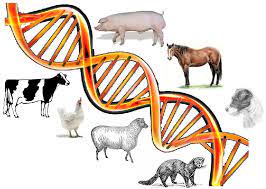 This course and related exercises practices are designed to equip students with a broad and integrated understanding of the established principles of Animal genetic genetics resources management, with the ability to design, implement and evaluate a specific animal breeding and production program.

Dear students, we wish you a warm welcome and success to this module!
The module is intended to prepare learners to work in highly specialized, technological and stressful environments. It equips learners with the expertise to make sound and rapid clinical judgements within the critical care environment and to recognize and deal with the alterations in various system functions based on appropriate scientific and advanced pathophysiology, pharmacology, microbiology, psychosociocultural sciences and ethical, legal and professional issues inherent in critical care settings.
Facilitators are:
Judith MUTYABULE Module leader
Rumagihwa Liberatha Module coordinator 0788756885
BAHATI George SANGANO 0788449998
Nankundwa Evelyne 0788528683
Dr Katende Godfrey
Violette DUSHIMIMANA 0788215863
Dr Lakshmi
Dr NSEREKO Etienne
Mr Thomas MUNYANZIZA
Mrs NADINE MUKAMUVUNYI
This module provides a basis for educational comparisons aimed at creating an understanding of issues influencing the focus, structure, organization and practice of education at international level, regional level and local level. The module also discusses the comparative approaches used in education.
This module explores the Nature of Place focusing on the foundations of what is or could be Rwandan (in) Architecture from the pre-colonial period till now. The module further expounds on ideas around architectural identity while building on links with language, in as far as language helps unpack what space and place embody. This is then used to explore the concepts of regionalism, cultural identity, the politics of space, social factors and the current practice of contemporary architecture. The module rallies around debate, written expression and making meaning as it relates to the nuances of the Rwandan language and its nature in expression.
Cover Photo: Headquarters of Virunga Mountain Spirits by BE Design. Photo courtesy of Bruce Engel
This model aims to enable students to acquire competence in designing steel-frame buildings. It covers column and beam layouts, framing of steel-frame buildings to resist vertical and horizontal loads, design of steel-frame buildings members (beams, columns, trusses, ties, foundation), and connections.
Space
““… Nothing that is not there and the nothing that is.” If a void is the nothingness that is absent, space might be understood as the nothingness that is present...”
Wallace Stevens’s poem, 1921.
Sense of and Sensing Space. This course aims to introduce architecture to students through one of basic units of architecture: “space”. Its first objective being “Making sense of space”, by understanding definition, creation and character of space. The second being “Sensing space”, by understanding human interaction with the created space, exploring how human senses captures, processes and reacts to the character of space.
Greetings Dear Students,
This is to welcome you to the second trimester studio module on Architectural Design IV. The theme is 'CULTURAL CONTEXTS' and is inspired by the unique concept of cultivating learning environments that are participatory, reflective, action-focused and change-oriented. In this trimester, we will focus on a comprehensive housing upgrading project serving as a pragmatic example of embracing informality in Kigali. Through a participatory design approach, supported by lectures, readers, charrettes, guest lectures, field visits and complimentary research packages in ‘water and sanitation’ and ‘made in Rwanda construction materials’, we will develop a scheme that responds to community culture, across all scales of the existing urban landscape as well as the social behaviours of the community it is designed for.
Learning Objectives:
1. To learn from selected precedent studies the: overall design concepts, interior and exterior relationships, human scale, urban life, cultural considerations, materials & construction and environmental efficiency.
2. To understand the core relationships between people, buildings, space and context (social, cultural and environmental).
3. To appreciate the importance of the users’ necessities and how the design ought to answer to specific community and contextual dynamics using a participatory design approach.
4. To demonstrate how knowledge gained from 1,2,3,4 can be applied to generate design interventions for housing the target community.
Course Instructor:
Dr. Josephine Malonza
Greetings Dear Students,
This is to welcome you to the 3rd year first trimester’s Architectural Design III module. The theme is 'CULTURAL CONTEXTS' and is inspired by the unique concept of cultivating learning environments that are participatory, reflective, action-focused and change-oriented. In this trimester, we will focus on a comprehensive housing upgrading project serving as a pragmatic example of embracing informality in Kigali. Through a participatory design approach, supported by lectures, readers, charrettes, guest lectures, field visits and complimentary research packages in ‘water and sanitation’ and ‘made in Rwanda construction materials’, we will develop a scheme that responds to community culture, across all scales of the existing urban landscape as well as the social behaviours of the community it is designed for.
Module Learning Objectives:

Course Instructor:
Dr. Josephine Malonza
Architectural Theory III introduces the student to the modern theories on Architecture weaving a file rouge with the Architectural vision in Africa. Architectural Theory III is divided in two parts. In the first part of the course students are asked to come across architectural theories related to the fundamental relationship between city and architecture. In the second part the students explore the same relationship in the Tropical African context. The module is structured according to the PBL principles therefore; the output will be an analysis on the real case of the Kigali City Masterplan 2020 that is studied according to the theories learnt during the module. All the lectures and course materials will be also available on the internet site: www.cstmanlio.wordpress.com.
The architectural design studio focused on the understanding of cultural contexts. A travelling studio proposed to local settlements of rich traditional culture and commercial activities, in Rwanda. Identified places include (Buhanda, Nyanza, Huye and Ruhuha), where the relationship of history, climate and culture is brought to bear on a small, detailed design project housed in that location. The design seeks to express the rich architectural, social and cultural heritage of the site, using sustainable and local construction techniques, shifting ecologies in a different civic and community environments. The work is divided into a research and analysis exercises, followed by a demanding site and building design. The emerging design shall be integrated with ARC 3325 Building Technology III course in order to develop a full detail set of building drawings.
Background Colour
Font Face
Font Kerning
Font Size
Image Visibility
Letter Spacing
Line Height
Link Highlight
Text Alignment
Text Colour