
Search results: 2679
Brief Description of Aims and Content:
This module aims to introduce a comprehensive systematic examination to identify and evaluate problems that may represent risks to personnel or equipment or prevent efficient operation in mining project.
The course also provides the general approach of conducting risks analysis used in industry depending upon the nature and extent of the project.
Learning Outcomes:
On completion of this module, students should be able to:
- Understand the importance of risks analysis in mining projects
- Identify mining hazards – find out what could cause harm
- Assess risks if necessary – understand the nature of the harm that could be caused by the hazard, how serious the harm could be and the likelihood of it happening
Apply multidisciplinary knowledge to conduct risk assessment of a mining project On completion of this module, students will be able to demonstrate the following skills:
-
Control risks – implement the most effective control measure that is reasonably practicable in the project circumstances
-
Review control measures to ensure they are working as planned
- Brief description of aims and content
As a most widely used mineral separation method, mineral flotation is the preferred method of mineral recovery for many of the most important minerals that are recovered in mining industry. The course is intended to provide students with an understanding of the fundamental elements of flotation systems such as solid, liquid and gas phases, electrochemical potential and thermodynamics of interfaces. The purpose of this course is to introduce students to flotation applications on naturally floatable minerals, sulfide, oxide, silicate and salt type minerals.
- 2. Indicative Content
Chemistry of flotation, mechanics of flotation, surface charge and zeta potential, surfactants, adsorption, flotation techniques, ore and pulp properties, flotation machines, flotation circuits, auxiliary apparatus. Surface chemistry of flotation, solid, liquid and gas phases, electrochemical potential, surfaces and interfaces, thermodynamics of interfaces, contact angles in three-phase systems. Flotation reagents, anionic and cationic collectors, non-ionizing collectors, control reagents, froths, interaction of reagents with minerals. Coagulation, flocculation and dispersion, aggregation with inorganic chemicals and organic polymers, selective flocculation. Flotation applications on naturally floatable minerals, sulfide, oxide, silicate and salt type minerals.
- 3. Learning and Teaching Strategy
Lectures are given to help students get basic understanding and knowledge on Technology of Mineral Flotation. Interactive discussions during lectures help students develop innovative skills and problem examples are intended to stimulate students to search topics of their own interest. Exercises are intended to reinforce the lecture materials, to encourage the student to read the study notes and to illustrate the application of the concepts to explicit and practical problems. Tutorial sessions help students to catch-up on what they have not understood during lectures or problems they have not been able solve. Lecture notes, problem sheets for tutorials and exercises are provided.
1. Brief Course content
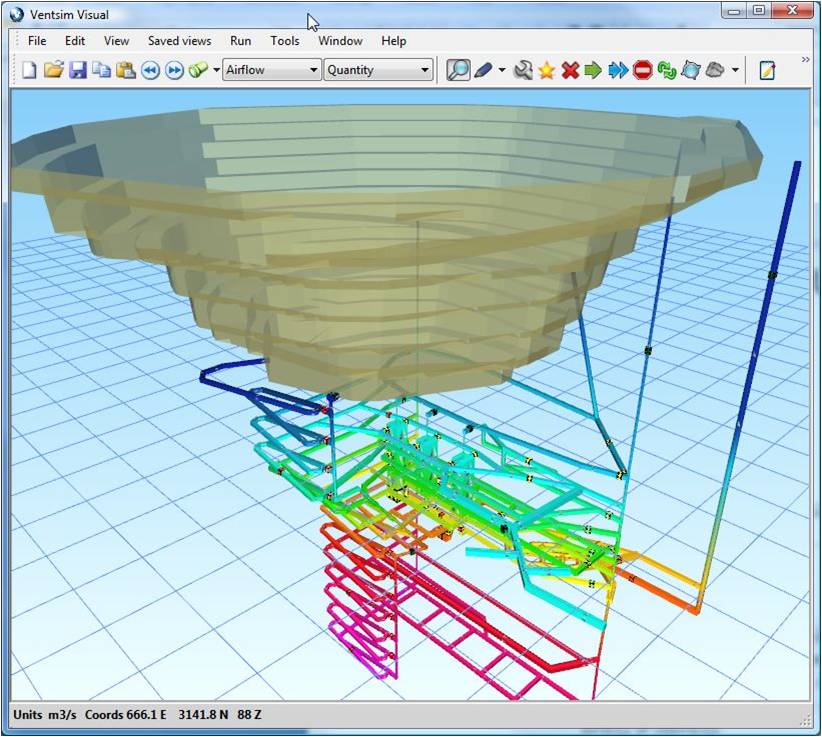
Mine ventilation planning
- Mine ventilation analysis
- controlling complex mine ventilation networks
So as to ensure the profitability and safety of the mine
2. Learning Outcomes
- On completion of this module, students should be able to:
- Demonstrate awareness of the legislative requirements for mine ventilation system
- Demonstrate practical skills necessary to undertake mine ventilation survey
- Design an appropriate mine ventilation system
1. 1 Brief description of aims and content
The module aims to provide students with practical understanding on the mining industry in Rwanda. It is organized as a seminar where students meet regularly to present and discuss recent geological and mining scientific papers. Some experienced people from industry and public institutions acquainted with Mining sector will be invited to give public talks on Mining issues.
1. 2 Learning Outcomes
Knowledge and Understanding
On completion of this module, students should be able to:
- Understand and describe mining methods used in Rwandan mining industry with some illustrative examples.
- Understand types, quantity and quality of mineral ores mined in Rwanda
- Have a clear historical perspective of geology and mining industry in Rwanda
- Know the government policy about Rwandan earth energy resources (peat, geothermal, methane gas).
- Understand processing technologies in mineral and quarry resources in Rwanda
- Know all institutions in charge of mining sector and their responsibilities (Rwanda Natural Resources, Ministry of Natural Resources, etc.)
Practical Knowledge/ Professional Skills
On completion of this module, students will be able to demonstrate the following skills:
- Assess and evaluate Mining methods used in Rwanda
- To identify areas of potential weaknesses in Geology and Mining industry in Rwanda and to propose corresponding pertinent solutions.
- Assimilate the key aspects of Mining Law and Regulations in Rwanda
Key Transferable Skills
On completion of the module, students will be able to:
- Develop the interest/ eagerness to provide support to the Rwandan Mining Sector
- Opening minded towards employment and other opportunities in connection with Mining Sector.
- Recognize the challenges of the Geology and Mining Sector and play a part in providing solutions.
1. 3 Indicative Content
Records on Rwandan and Regional Mining. Overview about Mining methods and techniques used in Rwanda. Rwandan mining policy. Government policy about earth energy resources (peat, geothermal, methane gas). Geological resources in Rwanda and in the region. Background information on the potential of the mining industry in Rwanda (This consists of information about prospective mineral ores based on various geochemical anomalies found). EDPRS and VISION 2020 strategic plans for developing Geology and Mining sector. Role of Geology and Mining sector in National economy. Mining Law and Regulations in Rwanda. Cassiterite mining in Rwanda. Wolfram mining in Rwanda. Gold mining in Rwanda. Coltan (tantalite) mining in Rwanda. Processing technologies in mineral and quarry resources in Rwanda. Environmental aspects of Mining in Rwanda. Major challenges in Geology and Mining Sector in Rwanda. Geology and mining scientific papers on Tin, Wolfram, Tungsten and Gold.
Welcome to the Mining Law and Regulations
This module is designed for learners approaching to complete their Bsc in Mining Engineering and Applied Geology. After acquiring technical skills pertaining to mining and geology, learners need to acquire additional skills and knowledge about mining governance, preparing them to enter the mining industry equipped with necessary tools to perform their jobs without violating laws and regulations and to contribute to the management of the industry with capacity to prevent and solve related conflicts and disputes.
Content-wise, the module covers different topics including General notions of law and Sources of Mining Law; Mineral licenses and related requirements; Legal aspects of activities connected to mining, including quarry, petroleum, methane gas and peats mining; Legal aspects of mining vis-à-vis Safety, Health and Environment (SHE); Common conflicting interests in mining including those ones related to labour, mine sites boundaries, land and the community. They also include the Legal aspects of different actors in mining (institutional framework), both local and international, Governmental, the Private Sector and the Civil Society. This module also covers issues of mining and political economy, including t\minerals supply chain due diligence and conflict minerals (Minerals Traceability and Certification) guides, guidance, guidelines, acts, standards and similar approaches. The module also covers Legal aspects of mining and community development including Corporate Social Responsibility (CSR) and related schemes like the Community Development Agreements (CDAs), and others. This topic also cater for the Local Content approaches, Mineral Taxes and the minerals revenues sharing schemes (by Governments). The module ends in assessing Risks associated with the non-compliance to the mining law and standards.
The module is delivered through both lectures and self-learning approaches, including assignments and learners' self-readings.
You are warmly welcomed.
The module leader: Bernard Nsanzimana, Teaching staff and Extractive Resources Governance Expert
This module will enable the learners to understand the basic laboratory sciences and techniques. It focuses on the nature and physiological effect of micro-organisms, biochemical compounds to the functioning of the human body, and general basics of pharmacology.
Enrolment key is 12345
Radiologic physics course deals with the application of physical energy to the diagnosis and treatment of human disease. Most of the content of this module is a review of what is taught in elementary physics. You will be introduced to the understanding of basic laws and general principles of physics, and to provide a sound knowledge of the physical properties of radiation, its production and interaction between radiations with the matter in order to apply them in professional subjects related to imaging sciences.
Good day to you all, It is with great pleassure I welcome you to this trimester. It is indeed an honour and privildge to reasure you of the need to continue to be good ambassadors of this great institution in learning and in character. This core pre-requisite module has three units which include: Radiographic image processing, X-Ray production and Radiobiology. The first and second unit will be delivered by Akochi, Sunday Joshua whereas the last by Mrs Mukangendo, Mecthilde (HOD).
For any assistance do not hesitate to reach the module leader, Mrs Mukangendo, Mecthilde on: mecthilde2011@gmail.com or +250788528611
Wishing you a blissful learning outcome.
This module is designed to introduce learners to imaging terms specific to human body, equipment and patient positioning and equip them with knowledge and practical skills related to radiographic anatomy and to perform standard radiographic procedures of the appendicular and axial skeleton, chest and abdomen.
At the successful completion of this module the learner should be able to utilize the various medical terminologies and demonstrate ability to perform plain radiography of the chest, abdomen , appendicular and axial skeleton.
Good day to you all,
I am pleased to welcome you back to studies, and hope we will all make maximum use of this facility for our learning purposes.
It is my utmost desire that you continue to be good ambassadors of this great institution in learning and in character.
In this module students will learn the physics, operational principles and innovations in digital radiography, fluoroscopy, computed tomography, magnetic resonance imaging, radiotherapy and nuclear medicine equpments. They will also be exposed greatly in quality management in radiology department.
To facilitate this module are: Akochi, S.J, Mr Bana Remy, Dr Odumeru E.A and Mrs Mukangendo.
Wishing you a blissful and memorable learning experience.
This module is designed to enable learners understand ultrasound physics and instrumentation as well us perform abdominal sonography and provide a report.
Good day dear students, I am pleased to welcome you to this new trimester in this academic year. I enjoin you to continue to be good ambassadors of this great citadel of learning both in learning and in character. This module is a three unit module. Unit 1 and 2 will discuss the magnetic resonace and computed tomography imaging of the head, spine, thorax, abdomen,and musculoskeletal system with related imaging parameters and cross sectional anatomy, while unit 3 will discuss Radiation therapy and nuclear Medicine,The facilitators are Jean Baptist Ndahirwe, Akochi, Sunday Joshua and Bana Remy Wilson for Magnetic resonance imaging, computed tomography and radiotherapy and nuclear medicine respectively.
For any concerns, do not hesitate to reach the module leader: Mr Bana Remy Wilson on baremy02@gmail .com or +250788754627 or Akochi,Sunday Joshua on +250781563157/josh4service@yahoo.com
Wishing you a blissful learning outcome
This course is a continuation of Imaging Practice I designed to provide the student precise and advanced training special areas on pediatric radiography, soft tissue radiography, foreign body localization, ward radiography/portable imaging, and dental radiography. The class will be supplemented with practical instruction and application in the radiographic room.
This module aims at imparting the knowledge and skills required by the students on marketing product as well as services. Specifically, the objective is to make the student to understand the philosophy of marketing, skills required by the marketing managers to manage the marketing activities domestically and globally. Also, student can understand market environment scanning, the individual and business customers and their buying decisions, developing and managing the marketing mix and monitoring and controlling the marketing activities. Further it aims at how learning from this module can help the student in their career growth.
The purpose of this course is to study the process of consumer decision making and its determinants, and the resulting implications for marketing strategy. This module is essential for companies as it helps them understand why individuals act in certain ways, identify what individuals want (products, services, attributes, associations), how they want to be spoken to (communicate) and influence behaviour in certain situations. Consumer behaviour is therefore a central topic in marketing. It is imperative that business graduates gain an in-depth understanding of the role of consumer behaviour for company success. The broad aim of the course is to understand the consumer decision-making process. This module will provide students with an understanding of the crucial importance of understanding the psychology of consumers for company goal achievement. Students will be able to apply the theories and principles of consumer behaviour in a specific context.
Background Colour
Font Face
Font Kerning
Font Size
Image Visibility
Letter Spacing
Line Height
Link Highlight
Text Alignment
Text Colour