
Search results: 91
Entrepreneurship 1 (Learnwise: WFNEN 100 - Orientation Program in Entrepreneurship) This 10 credit module is designed for students of level one in all departments of the school of Governance. It is offered by the University of Rwanda in partnership with the Wadhwani Foundation by means of a blend of in-class teaching and e-learning methods through the link below:
This Module of Management and Marketing of Small and Medium Enterprises (SMEs) is a core module which carries twenty (20) credit units. It is prepared and made available to all year three undergraduate students in Entrepreneurship Economics Education Programme, in the School of Humanities and Language Education (HLE) within School of Education at University of Rwanda. This course is a useful material to regular students in their academic pursuit and to novice managers and administrators as well as in their workplace.
ENGLISH TEST
This Test aims to assess the English proficiency level at the University of Rwanda. The test results will allow the University of Rwanda to place the new students in different levels of English proficiency and support them accordingly.
The test is computer-based and it takes 2 hours. To access the test, each participant will use his/her registration number as a username and the password which will be communicated before the candidate starts the test.
Software SEB
ENGLISH TEST
This Test aims to assess the English proficiency level at the University of Rwanda. The test results will allow the University of Rwanda to place the new students in different levels of English proficiency and support them accordingly.
The test is computer-based and it takes 2 hours. To access the test, each participant will use his/her registration number as a username and the password which will be communicated before the candidate starts the test.
Software SEB
Course Name: ET80564 Digital Communications
Course Information
- The course is given for the program: Undergraduate/Electronics and Telecommunication Engineering
- Credit units: 10
- Contact hours: 36
- Study term: Term 1
- Place: University of Rwanda, College of Science and Technology, Nyarugenge Campus
- Responsible lecturer: Charles Kabiri, PhD
- Syllabus: Available
Course objective:
In the last few decades, digital communication has drastically improved our quality of life. Amenities such as fax machines, pagers, cell phones, and internet, are now considered indispensable. None of them are possible without digital communication.
This course explores elements of the theory and practice of digital communications. The course will 1) model and study the effects of channel impairments such as noise and distortion, on the performance of communication systems; 2) introduce signal processing, modulation, and coding techniques that are used in digital communication systems.
Course Aim
Upon completion of this course, the student would able to understand and apply the fundamentals of Digital communications and technical concepts of mobile and wireless systems, including system design fundamentals, standards and trends in Digital Communications.
Learning Outcomes
By the end of the course the student will be able to:
- Analyze signals in both the time domain and frequency domain through a clear understanding of the relationship between the domains.
- Analyze random signals in terms of probability distributions, power spectral densities and correlation.
- Understand the need for modulation in communications.
- Determine power and bandwidth of analogue modulated signals.
- Understand methods for modulating and demodulating analogue signals.
- Understand pulse code modulation techniques for converting an analogue signal to a digital signal.
- Understand methods for modulating and demodulating analogue signals.
- Characterize the performance of digital sources using information theoretic concepts.
- Determine the information capacity of digital communication systems
- Calculate the noise budget of communication systems
- Analyze the effects of noise in digital modulation systems
- Analyze and characterize the performance of forward error correction systems used in digital communication systems.
- Understand optimum receiver theory and signal space concepts.
- Perform a system level design of digital communication systems.
The resources on this site have been created to enhance students’ training in Family Planning and Comprehensive Abortion Care. Below are brief guides for faculty instructors and for students on how best to use the videos and other resources as part of their clinical training. The course has been developed by faculty from CIRHT partner University of Rwanda's School of Medicine and Pharmacy and School of Nursing and Midwifery
The Meat Science and Technology module is designed for 3rd year students in BSc Food Science and Technology at the College of Agriculture, Animal Sciences and Veterinary Medicine – University of Rwanda. It is aimed at enabling students to develop a broad and in depth knowledge, skills and expertise on various aspect of meat science and technology including but not limited to Animal slaughter and slaughtering techniques; Inspection, cutting and grading of meat; Analysis of meat and meat products; Meat preservation techniques; Microbiology and spoilage of meat and meat products; Production and handling of poultry products; Microbiology and spoilage of fish and fish products; Fish science and technology, The principles of meat processing, meat pigments, flavor and color change. The course conciliates theory to practical sessions to achieve the intended modules outcomes.
FST3223-Food Microbiology is a module delivered to year 3 students in the BSc. Food Science & Technology Program at University of Rwanda College of Agriculture Animal Sciences and Veterinary Medicine. The Module is aimed at equipping the students with knowledge and skills to understand the interaction of microorganisms between food and environment and to practice various techniques of microbiological analysis of food thereby controlling food spoilage and ensuring food safety.
Welcome to the module of FST3221 Food Quality and Safety Management.
The FST3221 Food Quality and Safety Management is a core course taught in the second trimester of third year of the BSc Food Science and Technology in Department of Food Science and Technology, University of Rwanda. The module is divided into four learning units: Food Quality Management, Food Hygiene and HACCP, Introduction to Food Law and Introduction to Food Toxicology. The module aims to facilitate the students on the development of knowledge, skills and expertise on corrective implementation and management of quality and safety of food and food products throughout the entire food value chain.
Welcome to the module of FST4271 Food Plant Management. This is a core module taught in Y4 Trimester 1 of BSc Food Science and Technology, Department of Food Science and Technology, University of Rwanda.
At the completion of the course, students are expected to be able to:
- Design a food project/plant and manage it by the application of the studied principles
- Use the web tools and the libraries to find equipment suppliers for food industry
- Write as a food consultant a good report for investors or financers
- Understand how products are designed and developed in the food industry.
In line with ongoing University of Rwanda strategic plan of avoiding plagiarism and emphasize on academic integrity,
Social and Military Sciences program from College of Arts and Social Sciences (CASS) of the University of Rwanda (UR) is organizing for its academic staff and students a training workshop on the use of electronic resources and software tools to enhance and easy data collection, data processing emphasizing on plagiarism prevention in research activities.
A training for two days was organised for the UR students at the Campus
This is a joint short course organised by University of Rwanda and Stellenbosch University to equip students with conceptual and practical tips related to PhD studies.
Welcome to the recruitment test for part-time staff at the University of Rwanda - College of Education! This assessment aims to evaluate your skills and potential for the available roles. We encourage you to approach the test with confidence and take your time to showcase your abilities. Thank you for your interest in joining our team, and best of luck!
Dear Students,
You are welcome to this module of Case Law of International Criminal Courts which is among the courses in the LL.M program at the School of Law of the University of Rwanda. It provides students with an in-depth knowledge on international crimes, the case law of international Criminal Courts, among other things. It also provides knowledge on the establishment of international criminal courts and tribunals, their jurisdictions and their relationship with national jurisdictions in the punishment of international crimes.
Module Code: ASM6122
1. Module Title: Integrated Soil fertility management_
2. Year: 1 Semester: 1 Credits:__10__
3. First year of presentation: 2013 Administering School: SAFS
4. Pre-requisite or co-requisite modules: All modules taught in BSc programs related to soil and agroforestry sciences
5. Module coordinator: Prof Francois-xavier Naramabuye
6. Allocation of study and teaching hours See Notes of Guidance
|
Total student hours ___100____ |
Student hours |
Staff hours |
|
Lectures |
15 |
30 |
|
Seminars/workshops |
5 |
5 |
|
Practical classes/laboratory |
5 |
5 |
|
Structured exercises |
10 |
15 |
|
Set reading etc. |
20 |
- |
|
Self-directed study |
10 |
- |
|
Assignments – preparation and writing |
15 |
15 |
|
Examination – revision and attendance |
10 |
10 |
|
Field visit and report |
10 |
10 |
|
Total |
100 |
90 hours |
6.1 Brief description of aims and content (not more than five lines)
This module provides to the student, knowledge and skills related to linking the soil needs in terms of nutrients and environmental conditions conducive toward a sustainable soil fertility management. This module provides to the student the ability to understand the factors controlling availability of crop nutrients under various soil conditions.
6.2 Learning Outcomes
Knowledge and Understanding
Having successfully completed the module, students should be able to demonstrate knowledge and understanding of:
1. Understand the components of the entire integrated soil fertility management including: economical and socio-political issues.
2. Fertilizer manufacturing and environmental issues associated with fertilizer use
3. Analyze weather data in different agro-ecological zones and understand its relation with agroforestry systems
Cognitive/Intellectual skills/Application of Knowledge
Having successfully completed the module, students should be able to:
- Draw a clear and accurate linkage between the soil fertility status and environmental related factors.
- Develop environmental friendly soil fertility management taking into account: the nature of the soil and the suitable crops, economically profitable crops
Communication/ICT/Numeracy/Analytic Techniques/Practical Skills
Having successfully completed the module, students should be able to:
- Develop and compute fertilizers recommendations for different soil problems and different crops.
- Running a field trial to confirm the theoretical fertilizers recommendations
- Writing a scientific report on integrated soil fertility management issues.
General transferable skills
Having successfully completed the module, students should be able to:
- Autonomously planning and studying of assignments and research questions
- Development of research projects in connection to soil fertility management.
- Understanding of weather data collection and analysis
- Innovation of trials to solve specific soil fertility problems.
- Integrate soil science knowledge with simple field observations and records.
7. Indicative Content
Climate and soil Component: Introduction to integrated soil fertility management (ISFM);, definition and principles; Climate analysis; Soil inventory and classification; Soil and climate interactions.
Emerging challenges Component: Fertilizer manufacture and environmental issues; Soil fertility evaluation, recommendations and nutrient use efficiency; Impact of soil management and fertilizer use to environment; Critical review and case study on ISFM in different countries.
Ecological soil fertility management Component: Organic amendments; Crop rotations, Cover cropping; Green manuring; Animal manures; Composting and integrated use of organic wastes; Role of soil micro and macro organisms in soil fertility management; oil Health and soil Quality for crop growth.
Assignments and practicals
- Field work: Visiting and studying selected sites on the basis of particular soil fertility problems and environmental problems.
- Green house work:
o Compare different integrated soil fertilization packages in terms of soil nutrients availability, crop growth and impact on environmental related soil chemistry
o Comparing the effect of various organic amendments on soil fertility parameters. Soil analysis before and after incubation will include
- Laboratory work: Carry out soil chemical parameters measurement, soil physical parameters measurement as well as soil microbial parameters measurement.
- Data analysis, soil and other results interpretation and fertilizer recommendation
- Report write-up
Two writing assignments
- Assignment 1 (students to work in groups of two)
Write a review paper on the challenges faced by the integrated soil fertility management in the world, Africa, Eastern Africa and Rwanda. - Assignment 2 (individual)
Write a review paper on successful cases of integrated soil fertility management
9 Learning and Teaching Strategy
Lectures, Practicals and Field studies
10 Assessment Strategy
The module will be assessed on the basis of a three-hour written examination (40% of the final mark) and the continuous assessment and assignments (60% of the final mark). Students are required to achieve a pass mark (of 60%) on both the final written examination and the continuous assessment and assignments.
10 Assessment Pattern
|
Component |
Weighting (%) |
Learning outcomess covered |
|
In-course assessment: |
|
|
|
Laboratory assignment |
10 |
1,7,9 |
|
On-farm field research |
10 |
3,5,6,7,8,13 |
|
Writing assignments |
20 |
3,6,7,10,11,12,13 |
|
|
|
|
|
Final assessment: |
60 |
1,2,3,4,13 |
|
|
|
|
11 Strategy for feedback and student support during module
Individual feedback on laboratory analysis and field work, group and individual feedback on writing assignments. On the individual essay students receive feedback on scientific level, quality of writing and presentation (content, structure, use of pictures and graphs)
12 Indicative Resources
Core Text (include number in library or URL) (incl. ISBN)
Daniel Hiller, 1998. Environmental Soil Physics.Academic Press.
Bationo A. 2004. Managing nutrient cycles to sustain soil fertility in sub-Saharan Africa. Academy Science Publishers (ASP), TSBF.
Gichuru et al. 2003. Soil fertility management in Africa: A regional Perspective. Academy Science Publishers (ASP), TSBF.
Okalebo et al. 2002 Laboratory methods of soil and plant analysis: a working manual. TSBF
Ahrens, C.D. 1994. Meteorology today. An introduction to weather, climate and the environment, 5th ed., West Publishing, St. Paul, MN
Brady, N.C. and Weil, R.R., 2002. The nature and properties of soils, thirteenth edition. Prentice Hall, Upper Saddle River NJ. pages 75-120,. pages 720-724, pages 840-870
Handouts
1. Donald L. Sparks.1993. Advances in Agronomy, Volume 49.American Society of Agronomy Monographs Committee. Academic Press, INC. Harcourt Brace & Company.
2. Bationo, A. 1996. Long-term fertilizer use in sub-Saharan Africa. . International training program on plant nutrient management for sustainable agriculture, October 14-19, 1996; organized by IFDC in Co-sponsorship with Ministry of Agriculture, Livestock Development and Marketing, Government of Kenya
3. Byrnes BH. 1996. Soil testing and plant analysis. International training program on plant nutrient management for sustainable agriculture, October 14-19, 1996; organized by IFDC in Co-sponsorship with Ministry of Agriculture, Livestock Development and Marketing, Government of Kenya
4. Byrnes B.H. 1996. Environmental issues of fertilizer use. International training program on plant nutrient management for sustainable agriculture, October 14-19, 1996; organized by IFDC in Co-sponsorship with Ministry of Agriculture, Livestock Development and Marketing, Government of Kenya
5. Bationo A. Management of phosphorus fertilizers.
6. Naramabuye F-X. 2004. Use of organic amendments as ameliorants for soil acidity in laboratory and field experiments.University of Kwa-Zulu natal.
Background Texts (include number in library or URL) (inc ISBN)
1. Brady N.C. and Weil R.R. 2002. The nature and properties of soils. 13th ed. Prentice Hall, NJ Havlin et al. 1998. Soil fertility and fertilizers: an introduction to nutrient management. 6th ed. Prentice Hall.
2. UNIDO/IFDC 1998. Fertilizer manual. Kluwer Publishers
3. Woomer PL and Swift MJ. 1994. The Biological Management of Tropical Soil Fertility. Wiley and Sons: New York
4. Hartemink, A.E., 2003. Soil fertility decline in the tropics - with case studies on plantations. ISRIC-CABI Publishing, Wallingford. Pages 80-86, 92-96 and 103-107.
5. van Wambeke, A., 1988. Site selection and soil variability, First training workshop on site selection and characterization. IBSRAM Technical Notes no. 1. IBSRAM, Bangkok. Pages. 43-51.
Journals
A. Ndoli, F. Naramabuye, R. V. Cao Diogo, A. Buerkert and R. Nieder4. 2013. Greenhouse experiments on soybean (Glycine max) growth on Technosol substrates from tantalum mining in Rwanda. International Journal of Agricultural Science Research Vol. 2(5), pp. 144-152, May 2013 Available online at http://academeresearchjournals.org/journal/ijasr ISSN 2327-3321 ©2013 Academe Research Journals
Nilani L. De Silva, Naramabuye Francois.X. and Nicolas A. Jackson. 2013. People & Profit Striking a Balance. Published by Nordic ePublisher, Kammakargatan 44, 111 60 Stockholm, Sweden. ISBN 978-91-978436-3-8
Paulmann, I., Weber, T.K.D., Naramabuye, F., Ndoli, A., Gakwerere, F., Nieder, R. (2011): Spurenelementbelastung von Böden im Bergbaugebiet Gatumba, Ruanda. In: Böden verstehen, Böden nutzen, Böden fit machen, Jahrestagung der Deutschen Bodenkundlichen Gesellschaft Berlin, 03-09/09/2011. http://eprints.dbges.de/630/
Ndoli, A., Naramabuye, F., Mochoge, B., & Nieder, R.2012. Growing Tithonia diversifoliafor fertility restitution of technosols from coltan mined soils of Gatumba, Rwanda. Third RUFORUM Biennial Meeting 24 - 28 September 2012, Entebbe, Uganda.
Salstein, D.A. 1995. Mean properties of the atmosphere. In Composition, chemistry and climate of the atmosphere. Singh, H.B. (ed.), Van Norstand Reinhold, NY, pp 19-49.
Sanchez, P.A., Palm, C.A. and Buol, S.W., 2003. Fertility capability soil classification: a tool to help assess soil quality in the tropics. Geoderma, 114(3-4): 157-185
Barrera-Bassols, N. and Zinck, J.A., 2003. Ethnopedology: a worldwide view on the soil knowledge of local people. Geoderma, 111(3-4): 171-195.
Naramabuye, FX; Haynes, RJ; Modi, AT, 2008. Cattle manure and grass residues as liming materials in a semi-subsistence farming system Agriculture Ecosystems and Environment vol. 124, no. 1-2, pp. 136-141
Naramabuye, FX.and Haynes, RJ. 2007. The liming effect of five organic manures when incubated with an acid soil. Zeitschrift fur Pflanzenernahrung und Bodenkunde, vol. 170, no. 5, pp. 615-622
Naramabuye F.X and Haynes Richard J.2006. Effect of organic amendments on soil pH and Al solubility and use of laboratory indices to predict their liming effect (Soil Science, An interdisciplinary Approach to Soil Research. Vol 171(10) page:754-763
F.X. Naramabuye and R.J. Haynes. 2005. Short term effects of three animal manures on soil pH and Al solubility Australian Journal of Soil research,Vol 44,no 5
Naramabuye F.X, Mutesi J.P. 2007. Agroforestry for Oxisols fertility amelioration, a case study on the effects of Ficus benghalensis trees on soil pH, Organic C and P of an Oxisol of Rwanda (Southern Province, Huye, Tumba), ISAR Rwanda Institute for Agricultural Research
Key websites and on-line resources
Teaching/Technical Assistance
- Laboratory assistance
- Driver for field visits
Laboratory space and equipment
- Soil laboratory facilities: School of SARDAE
- Equipment for soil and climate field analysis
Computer requirements
- Computers for group assignments and reports; Others
13: Please add anything else you think is important
14: Teaching Team
Prof. Francois Naramabuye (Module leader); Dr. Hamudu Rukangantambara
This module aims to help develop and enhance such qualities as creativity, inventiveness and independent problem-solving, so as to strike a balance between theory and practical skills (e.g. how to prepare business plans and accounts) in all disciplines offered by University of Rwanda.
This module is the complement of Entrepreneurship and Innovation II. It aims at enables students to develop enhance the qualities of creativity, inventiveness and independent problem-solving skills, so as to strike a balance between theory and practical skills (e.g. how to prepare business plans and accounts) in all disciplines offered by the University of Rwanda.
Welcome students to the course of criminalistics !
The course of Criminalistics is taught, as an elective course with 5 credits, in year 4 of the undergraduate program at the School of Law of the University of Rwanda.
Learning objectives: The course aims at equipping students with skills and techniques on how to conduct crime scene investigations. It will offer the students the ability to know how the crime scene is protected; evidence collected and preserved up to the find out evidence the forensic laboratory for analysis.
Learning outcomes: At the end of this course, students should be able to:
Explain and discuss the rationale of crime scene investigations and scientific evidence
Explain and discuss techniques of searching evidence; ensures its chain of custody up to the forensic laboratory for analysis and be aware of the weight of the scientific and objective evidence therein to convict the real perpetrator in court.
Facilitator :
Laurent Shenge . l.shenge@ur.ac.rw.
+250 (0) 788850304
The module of International Criminal Law is among the core courses required for students to complete their undergraduate program in Law at the University of Rwanda. It provides students with substantial understanding of rules and principles of Internationbal Criminal Law which are designed both to proscribe certain categories of conduct and to make persons who engage in them criminally liable. This includes, therefore, rules that authorize states, or impose upon them the obligation to prosecute and punish such criminal conducts.
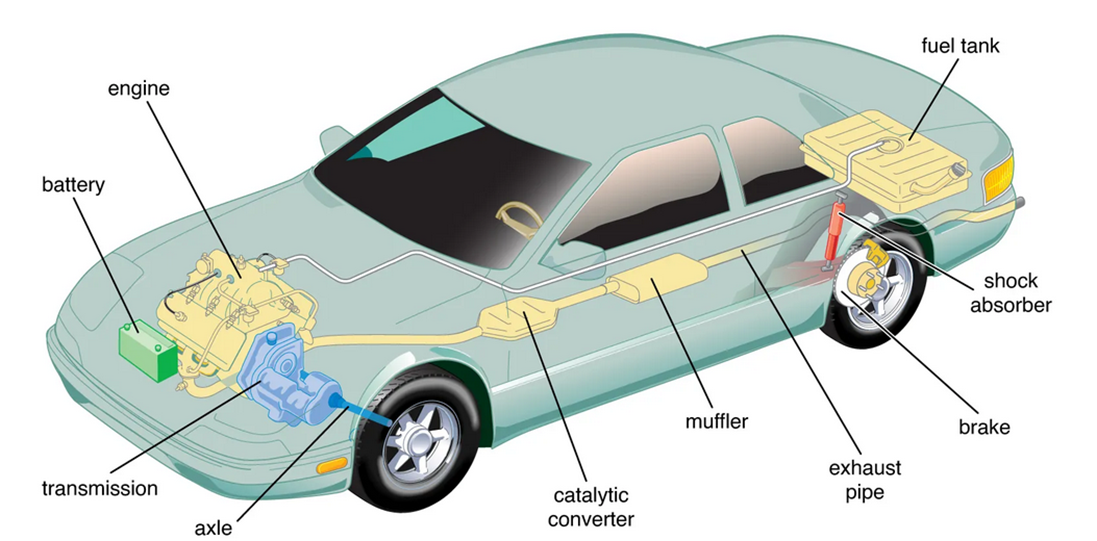
The aim of this module is to impart knowledge to the learner on: the construction and working principle of various parts of an automobile, the practice for assembling and dismantling of engine parts and transmission system, the principles and characteristics of internal combustion engines and engine auxiliary systems.
Lecturer:
a.ngendahayo@ur.ac.rw
Background Colour
Font Face
Font Kerning
Font Size
Image Visibility
Letter Spacing
Line Height
Link Highlight
Text Alignment
Text Colour