
Section outline
-
Introduction
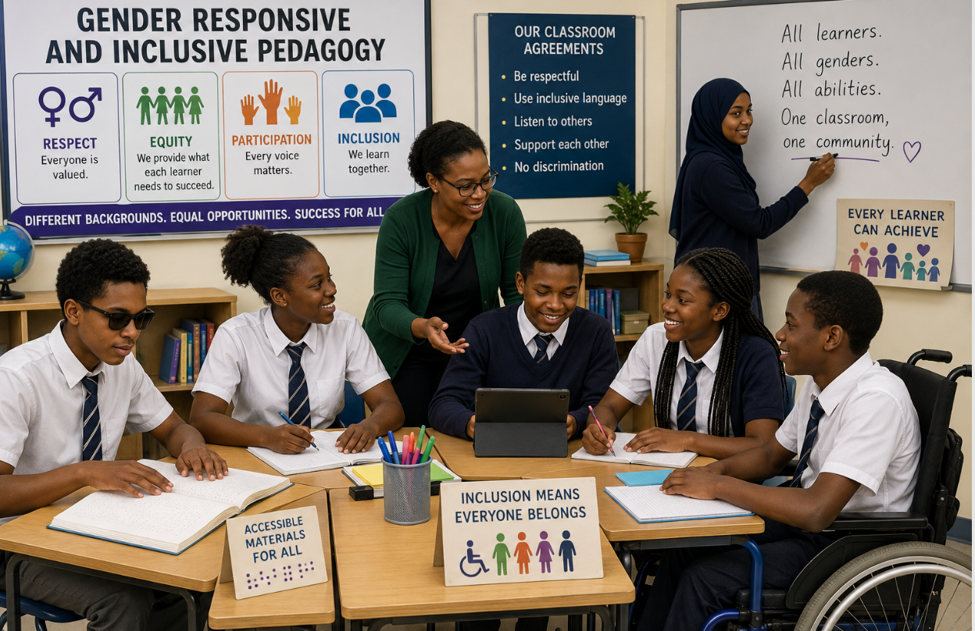
Gender responsive and inclusive pedagogy refers to teaching approaches that ensure all learners, regardless of gender, ability, background, or social status, are treated fairly and given equal opportunities to participate and succeed in learning. This unit helps you understand how you can create a safe, equitable, supportive, and non-discriminatory learning environment that meets the needs of every student. It introduces key gender-related concepts and how they can be applied in schools to address bias and promote equality. It also explores the principles of inclusive pedagogy, the characteristics and support of learners with special educational needs, the principles, strategies, and barriers to gender responsive and inclusive pedagogy with a focus to the case of Rwanda.
Unit Learning Outcomes
By the end of this unit, you will be able to:
- Explain the concepts of gender-responsive and inclusive pedagogy in education contexts to address gender biases and foster inclusive in your teaching practices.
- Categorize learners with special educational needs for building foundational understanding of inclusive education.
- Analyze challenges and achievements of gender-responsive and inclusive education in Rwanda for improving implementation of inclusive practices.
- Discuss effective teaching strategies for promoting gender responsiveness and inclusion in the teaching and learning process.
-
-
Opened: Friday, 17 July 2026, 12:00 PMClosed: Sunday, 19 July 2026, 1:08 PMStudents mustMark as done
-
-
-