
Section outline
-
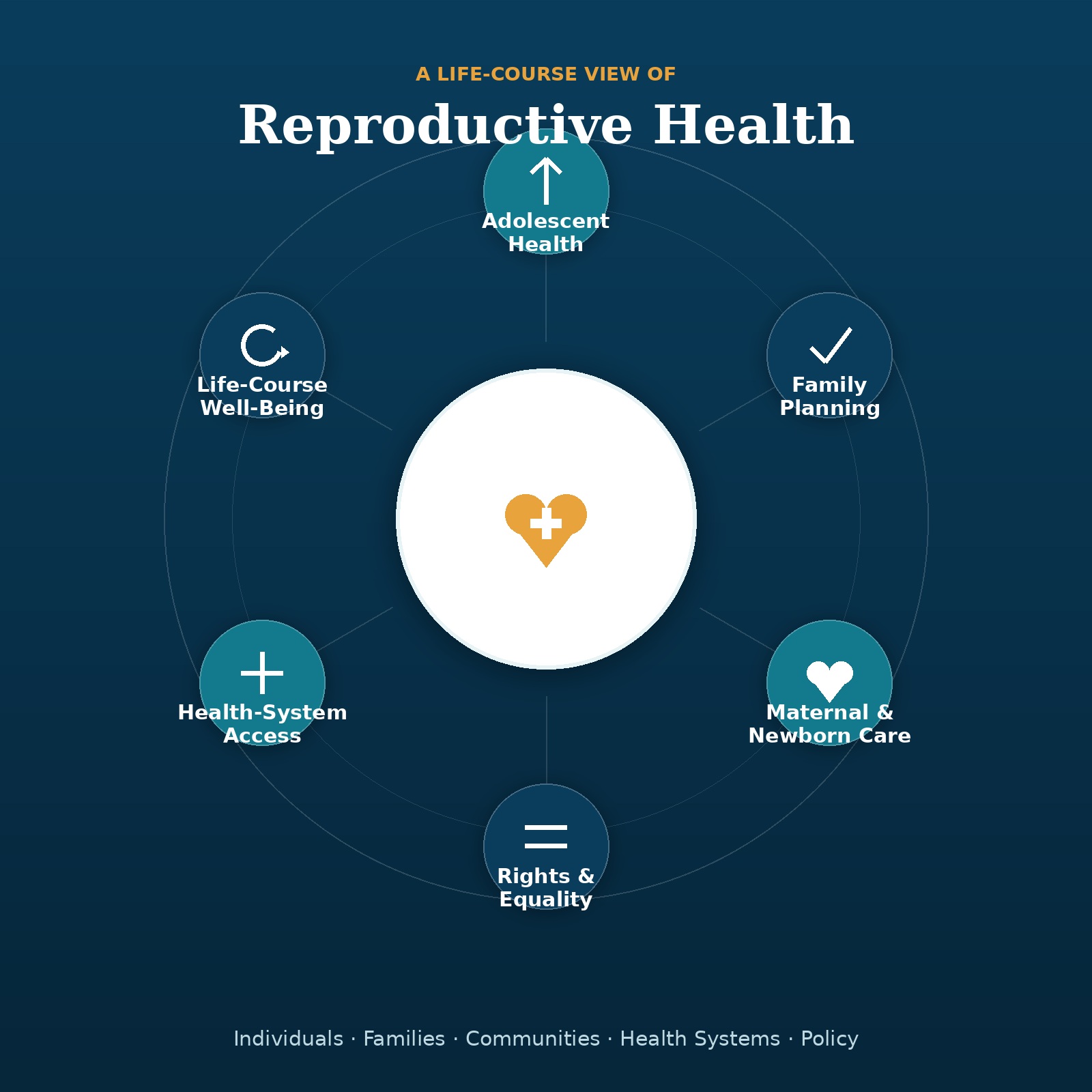
Aim
To enhance you understanding of sexual and reproductive health and its importance in improving population health outcomes.Learning Outcomes
By the end of this teaching unit, you will be able to:- define reproductive health
- know the historical development of RH
- understand magnitude of RH problems
- understand the relationship of reproductive health and gender
- know the targets of reproductive health
- explore the components of Sexual and Reproductive Health, trends in sexual and reproductive health, and reproductive health indicators.
-
-
-
- Why should reproductive health be treated as a population-health priority in Rwanda's health system?
- How do gender norms and social determinants shape reproductive-health outcomes in your community?
- What would it take to close the antenatal-care and unmet-need gaps shown in this lecture?
- How can health systems better involve men and adolescents in reproductive-health programming?
- Which SRHR principle do you see most often denied in practice — and why?
-
Learning outcomes
By the end of the course, students will be able to:
1. Explain core nutrition and health concepts, including nutrient functions, digestion and absorption, and dietary reference intakes and energy requirements, and justify nutrition as a public health priority.
2. Apply and interpret anthropometric, biochemical, clinical and dietary assessment methods, and analyze the causes, determinants and effects of malnutrition using the UNICEF conceptual framework.
3. Distinguish and combine nutrition-specific, nutrition-sensitive and enabling interventions, explain how nutrition surveillance turns data into action, and research, present and discuss evidence-based recommendations on a public health nutrition topic as part of a team.
-
- Course description
- Learning outcomes
- Course plan and schedule
- Course outline
- Assessment plan
- Materials
-
Chapter 1: Introduction: Definitions and Concepts of Nutrition and Health
Chapter 2: Nutrients and Digestion / Use
Chapter 3: Dietary Reference Intakes (DRIs) and Energy Requirements
Chapter 4: Assessment of Nutritional Status and Dietary Assessment
Chapter 5: Causes, Determinants and Effects of Malnutrition
Chapter 6: Nutrition Interventions: Nutrition-Specific vs Nutrition-Sensitive
Chapter 7: Nutritional Surveillance
21.8 MB -
Assignments
Group
Topic
Task
1
Maternal and child nutrition programs in Rwanda
Identify and describe national programs; discuss goals, strategies and target populations; analyze effectiveness; highlight challenges and recommendations.
2
Causes of maternal and child undernutrition
Discuss causes/determinants of maternal and child undernutrition in Africa and recommend appropriate interventions.
3
Adolescent girls (10–19 years)
Discuss nutritional status of adolescent girls in Sub-Saharan Africa: assess status and contributing factors, identify programs, make recommendations.
4
Body composition measurement and its challenges
Evaluate methods of measuring body composition (strengths, limitations, practical challenges) and recommend the most suitable approaches for research and public health in Africa.
5
Social protection and nutrition
Review evidence using two case studies, Brazil’s Bolsa Família and Ethiopia’s Productive Safety Net Programme; summarize main findings on nutritional outcomes and lessons.
6
Nutrition transition
Discuss barriers to healthy eating in Africa within the nutrition transition and recommend evidence-based strategies to overcome them.
7
Dietary intake and biomarkers
Discuss dietary intake and biomarkers in the Rwandan population using the 2025 Rwanda Demographic and Health Survey.
Instructions for the group assignment
• Length: maximum 25–30 slides; 20–30 minutes including discussion.
• Presentaion: slides split into equal sections so that every group member presents.
• Visuals: pictures, tables and figures are encouraged.
• Added information: stronger evidence, current statistics and clearer arguments where applicable.
-
-