
Search results: 2679
- Understand the intermediate concepts of microeconomic principles and their application
- Make use of mathematical skills for graphical and algebraic analysis
- Analyze and interpret graphs
On the world agenda, microfinance institutions are promoted as effective tools for reducing poverty. The current focus on microfinance is based on the need to shift from top-down to bottom up development approach. The course provides a multidimensional exploration covering the demand of the financially excluded category, sustainable supply to meet this demand, as well as the pricing strategies of these financial services. This course aims to provide with microfinance with an understanding of microfinance as an important development tool for promoting sustainable development and women empowerment in developing countries.
Dear Year 4 students,
This is the following part of your clinical placement which should cover the second and the third Trimester.
You are invited to participate actively as usual
Any problem please contact your Facilitators and/or module coordinator.
Best regards,
Joella
Dear Students,
Welcome to the Midwifery Leadership and Management Module.
1. Module Aim
The aim of this module is to provide midwives with
the contextual knowledge and professional understanding needed to assume a
leadership role in the formulation of public policy, to improve the health and
services for women and newborns.
- Quizzes: 10%
- Assignment :45%
- Attendance: 5%
II. Final Examination: 40% (learners must pass continuous assessment Test)
UNIT 2: MIDWIFERY MANAGEMENT
UNIT 3: QUALITY IMPROVEMENT
Dear Students,
Welcome to the Professional Issues in Midwifery Module
The Aim of the Module
The aim of this module is to provide the learners with an opportunity to explore current legal, ethical, and patient safety issues related to professional midwifery practice
Brief description of the Module
This module provides an opportunity for the learner to explore current legal, ethical, and patient safety issues related to professional midwifery practice. This foundational module forms the basis of the midwifery leadership role. Learners will integrate policy, ethics, quality and safety, and evidence-based practice into midwifery role development.
All students are responsible for the module content and class activities held in class. Failure to attend class on time may result in not participating in structured class activities. Being late may also result in not being taught the content that will be assessed
Intended Learning Outcomes
At the end of this module, you will be able to:
1. Explain the global health delivery in Midwifery
2. Make use of the learned standards and scope of practice in advanced midwifery practices
4. Develop a strategic plan in delivering safe practice in midwifery care
Facilitators of the Module
- Names: Marie Grace Sandra Musabwasoni
Title: A. Lecturer
Address: Midwifery department
Phone: 0788541285
Email: musandrace@gmail.com
Role: Module Coordinator and Unit facilitator
- Names: Dusabe Ruth
Title: Assistant Lecturer
Address: Midwifery department
Phone:0788444395
Email: milsruth@gmail.com
Role: Unit facilitator
- Names: Yvonne Delphine Nsaba Uwera
Title: Assistant Lecturer
Address: Midwifery department
Phone: 0783333341
Email: yvodely@gmail.com
Role: Unit facilitator
- Names: Ms. MUREKEZI Josephine
Title: Senior Lecturer
Address: Rwanda Association of Midwives
Phone: 0788624083
Email: jrekezi74@gmail.com
Role: Unit facilitator
This module aims at deepening knowledge and understanding of methodologies for the study and application of this knowledge to the study and analysis of migration. It focuses on measuring the population flows between administrative units and acquiring a solid understanding of major theoretical approaches to migration and the application of theoretical and historical knowledge to the analysis and understanding of contemporary issues and cases in the field.
This module offers the opportunity to investigate properties of ore minerals, textures and deposit features, sampling methods, methods of estimating tonnage and grades and reporting of resources and reserves. It is designed to enable students to understand and identify key geological features of ore deposits and to appreciate the financial evaluation of mining projects. Practical classes will include the examination of typical ores and host rocks.
|
Brief description of aims and content This module provides a comprehensive and practical understanding of the impacts both positive and negative that geology and mining related activities may have on society and environment. On completion of this course, students should be able to identify, analyse and apply state-of-the-art techniques in environmental management of the sites as well as identify the major issues and management strategies associated with social/community impacts of mining in Rwanda and internationally. By completion of this module, students will be able to:
|
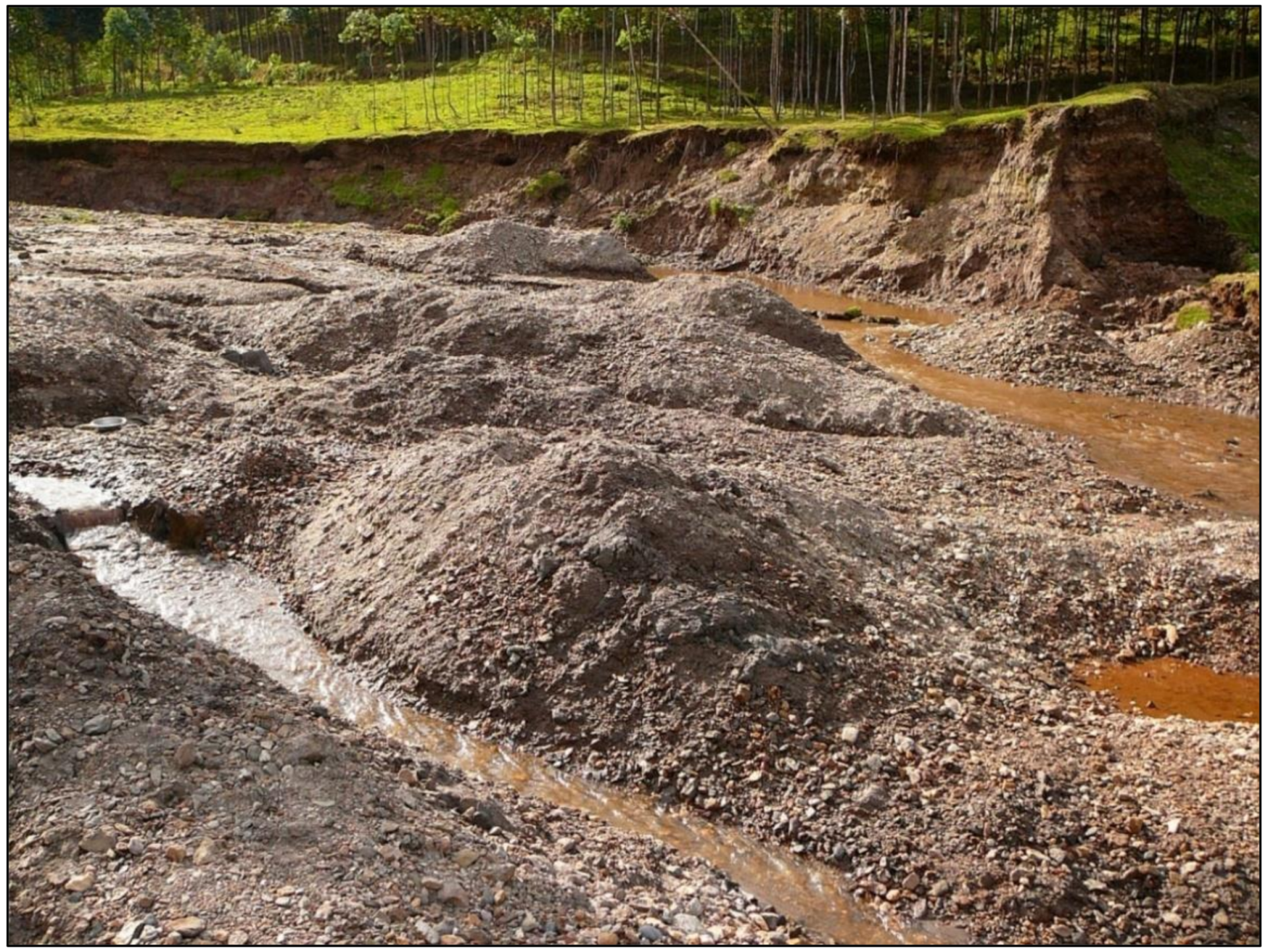
The great advantage of geophysics to the geology and mining sector is that it can be used to make a measurement taken at the surface. In fact, geophysics is the only branch of the earth sciences that can truly look into the Earth’s interior, that is remotely detect the presence of buried bodies and structures. In contrast, geology can only infer them. For example are there at depth unsuspected structures such as faults, intrusion, salt domes, mineral deposits, oil and gas reservoirs, all of them can be detected by appropriate geophysical measurement at the surface. Therefore, geophysics is able to add the third dimension, depth, in a way that traditional geologist often cannot. etc..
This course aims to introduce students to metallurgical engineering industry. It covers fundamental principles of extractive metallurgy such as pyrometallurgy, hydrometallurgy.
This module aims to provide the opportunities for students to be equipped with the fundamentals, both theory and practice of mineral processing technology. It also enables them to appreciate the importance of minerals and the criticality of value addition to mineral resources by physical and physico-chemical processes.
Background Colour
Font Face
Font Kerning
Font Size
Image Visibility
Letter Spacing
Line Height
Link Highlight
Text Alignment
Text Colour