
Main content blocks
Section outline
-
Introduction
The unit defines parasites and medical parasitology and its principal concepts. Then explains parasites adaptations in order to interact with the host with the undesirable consequences. Classifies, characterizes and locate the medically important parasites in the world of micro organisms. It also covers routine diagnostic techniques used in the peripheral medical parasitology laboratory.
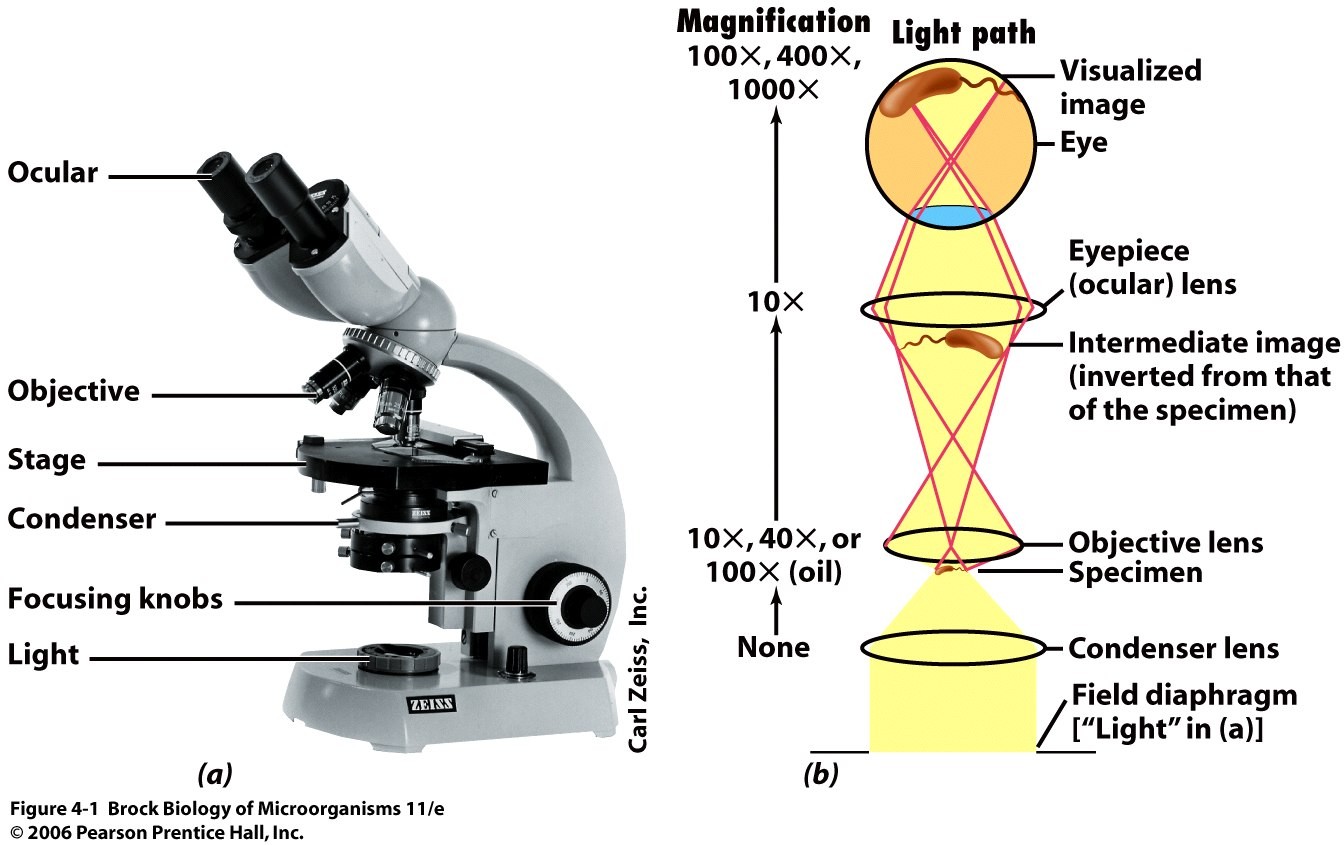
Image: A Microscope and its Optical System, an Important Tool in Medical Parasitology Laboratory
Learning Outcomes
- Define a parasite and medical parasitology and the principal concepts;
- Explain adaptations and interactions between the parasites and the hosts and the resultant consequences;
- Classify the parasites according to their characteristics;
- Illustrate routine diagnostic techniques in the medical parasitology unit.
-
Feacal Concentration techniques:
- Modified Formal- Ether Sedimentation technique for larvae, ova and cysts
- Modified Formal- Ether Sedimentation technique for oocysts
- Acid- Ether Sedimentation technique
- By using Sheather’s solution
- By using Sodium Chloride solution
- By using Zinc Sulphate
- Kato Katz Technique
-
-
Stool specimen
Safety,
Collection
Processing
Macro and Micro Examinations etc
Background Colour
Font Face
Font Kerning
Font Size
Image Visibility
Letter Spacing
Line Height
Link Highlight
Text Alignment
Text Colour